



13 CEOs. Different industries, different countries, different company sizes. And yet, when asked this one question, their answers sounded strikingly similar:
What does a good leader need? — Empathy.
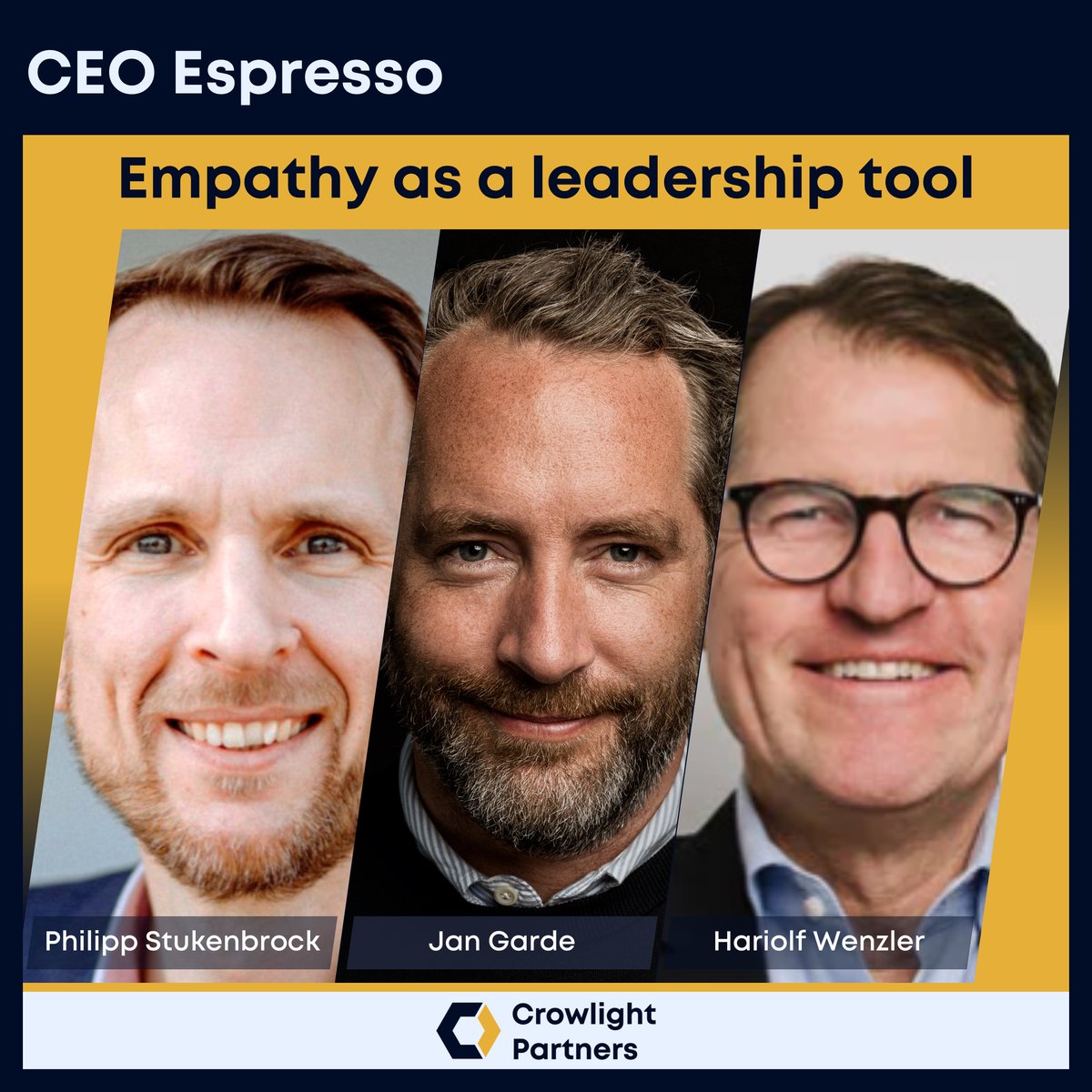
🔹 Hariolf Wenzler, CEO of technology law firm YPOG: “Empathy. And love for people.”
🔹 Jan Garde, founder of The Embassies: “Empathy, strategy, and vision.”
🔹 Philipp Stukenbrock, CEO of 8.2 Consulting AG: “An empathetic approach to all employees.”
One might be tempted to dismiss this as polite consensus. We found it rather remarkable — because the three could hardly be more different in the way they lead.
Wenzler leads a law firm with more than 400 people and understands empathy as a mechanism: How do you build trust systematically, even across cultural boundaries?
Stukenbrock leads a network of independent offices and emphasizes that he does not lead by instruction, but by making sure everyone wants what the company needs.
And Garde, who after two decades in brand design is now building a new living concept across Europe, describes empathy as a prerequisite for making external partners feel like internal ones.
Empathy as a leadership instrument is therefore not the same as empathy as a character trait. The former can be developed, applied, and adapted to the situation. The latter you either have — or you don’t.
What became clear to us after 13 conversations: The CEOs who spoke most convincingly about leadership never really spoke about themselves. They spoke about the people they lead.