


𝗧𝗵𝗲 𝗯𝗲𝘁𝘁𝗲𝗿 𝘆𝗼𝘂‘𝗿𝗲 𝗱𝗼𝗶𝗻𝗴, 𝘁𝗵𝗲 𝗺𝗼𝗿𝗲 𝗿𝗲𝘀𝗶𝗹𝗶𝗲𝗻𝗰𝗲 𝘆𝗼𝘂 𝗻𝗲𝗲𝗱.
That‘s not how most people think about resilience, but it‘s true:
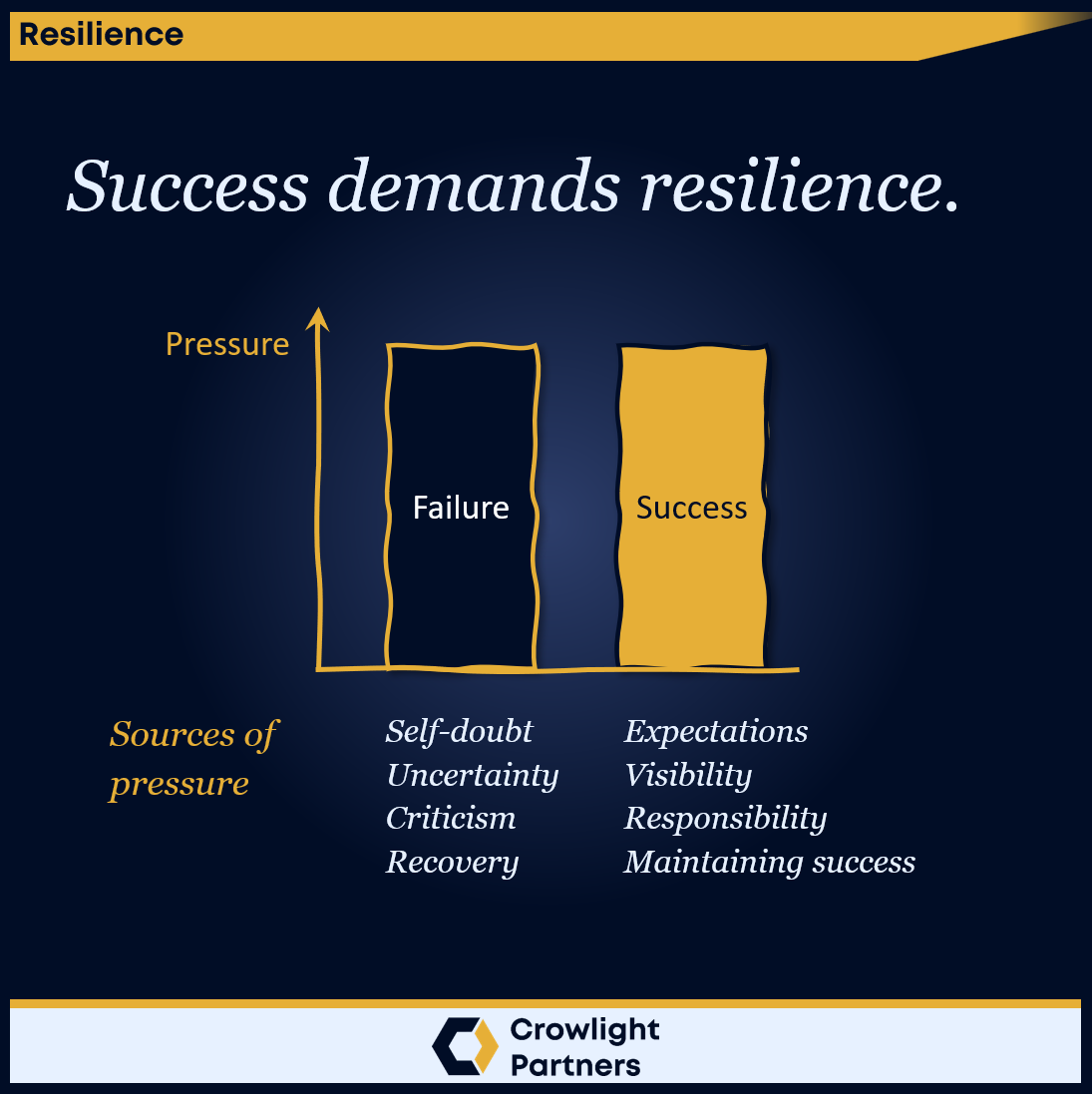
𝗦𝘂𝗰𝗰𝗲𝘀𝘀 𝗱𝗼𝗲𝘀𝗻’𝘁 𝗿𝗲𝗱𝘂𝗰𝗲 𝘁𝗵𝗲 𝗻𝗲𝗲𝗱 𝗳𝗼𝗿 𝗿𝗲𝘀𝗶𝗹𝗶𝗲𝗻𝗰𝗲. 𝗜𝘁 𝗶𝗻𝗰𝗿𝗲𝗮𝘀𝗲𝘀 𝗶𝘁.
When we talk about resilience, we usually picture someone recovering from failure, crisis or adversity. But there is another kind that receives far less attention: the resilience required to handle success.
Failure and success can generate similar levels of pressure. The difference lies in where that pressure comes from.
A setback brings self-doubt, uncertainty, criticism and the challenge of recovery.
Success changes the nature of pressure:
- Expectations rise.
- Every decision is scrutinized.
- Every mistake becomes more expensive.
𝘚𝘶𝘥𝘥𝘦𝘯𝘭𝘺, 𝘵𝘩𝘦𝘳𝘦 𝘪𝘴 𝘴𝘰𝘮𝘦𝘵𝘩𝘪𝘯𝘨 𝘵𝘰 𝘭𝘰𝘴𝘦!
The safest option starts to look very attractive. And that‘s exactly when organizations become vulnerable – they stop taking the difficult decisions that made them successful in the first place.
It‘s also why raising an already high bar takes a different kind of resilience than fixing what‘s broken. Everyone can solve problems; that‘s become a commodity. Very few organizations can systematically improve performance that‘s already stellar.
Why do elite athletes still rely on coaches after winning Olympic medals? Because they know: Success doesn‘t mean they have no blind spots. It often creates new ones.
Similarly, elite organizations aren’t the ones that avoid pressure. They’re the ones that keep inviting constructive challenge from the outside.
𝘚𝘶𝘤𝘤𝘦𝘴𝘴 𝘮𝘢𝘬𝘦𝘴 𝘦𝘹𝘵𝘦𝘳𝘯𝘢𝘭 𝘱𝘦𝘳𝘴𝘱𝘦𝘤𝘵𝘪𝘷𝘦𝘴 𝘮𝘰𝘳𝘦 𝘷𝘢𝘭𝘶𝘢𝘣𝘭𝘦—𝘯𝘰𝘵 𝘭𝘦𝘴𝘴.
Where does your organization still invite challenge once things are already going well?