



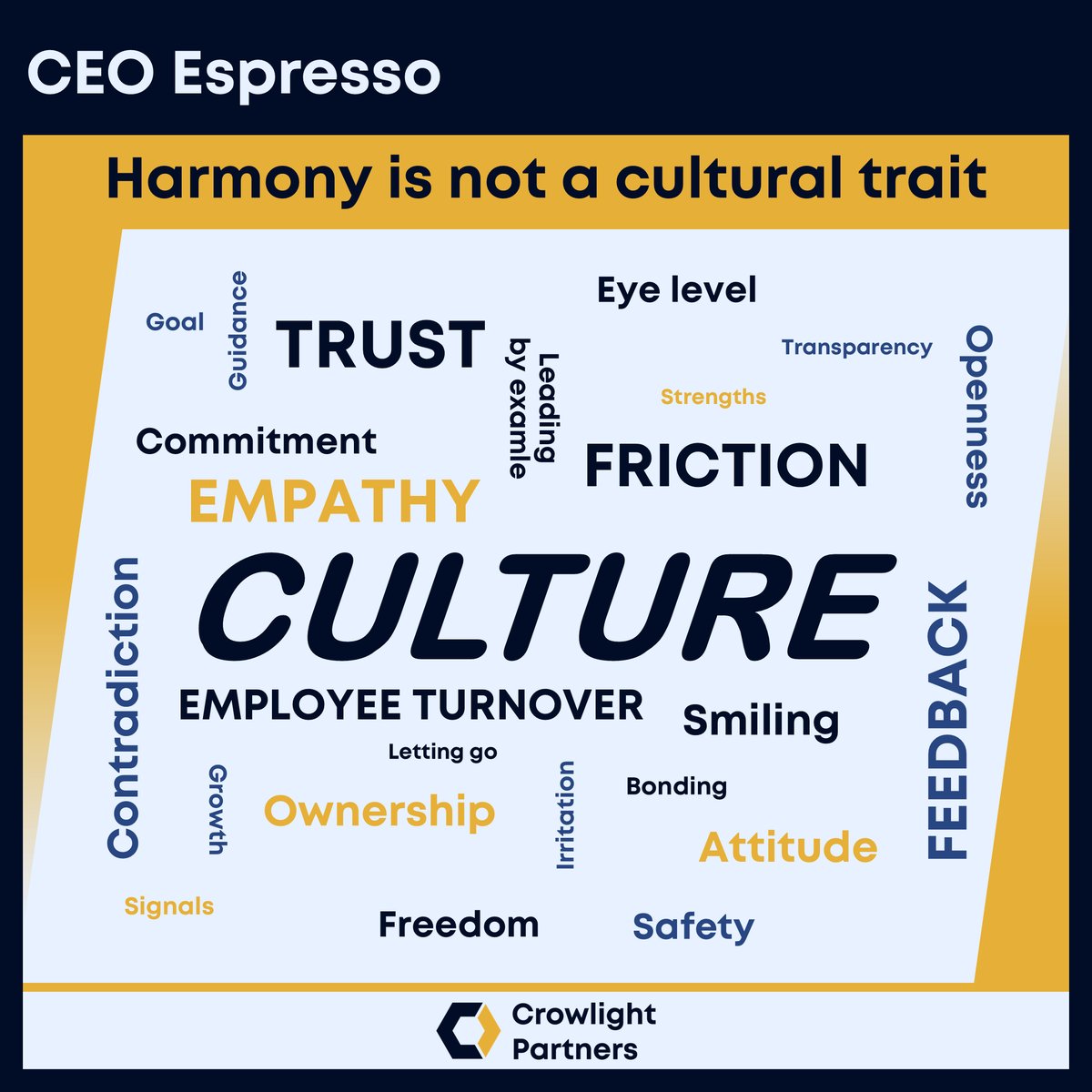
How does a leader know whether the culture is right?
Not through the annual employee survey. Not through the values statement on the wall. But through what happens every day — or doesn’t.
The answers from our interviewees were refreshingly concrete.
🔷 Guillaume Dubrule, CEO of Rexel Germany: “Do people dare to confront me with something that initially irritates me? For me, that is the strongest sign.”
🔷 Emmanuel Chéret, CEO of bsurance: “Dissent is welcome here. When people feel safe enough to disagree, trust is present.”
🔷 Stefan Günzel, Managing Director of INNOSYSTEC: “Healthy fluctuation. Not too much, not too little. Zero fluctuation sounds good — but it isn’t.”
Three different answers. And yet they all describe the same phenomenon: a healthy culture does not reveal itself in harmony, but in the ability to allow friction.
Dubrule puts it succinctly: culture cannot be decreed — it can only be lived by example. The proof is not the mood in an all-hands meeting. It is found in the moments when someone he rarely sees still speaks up.
Chéret’s benchmark is related, but sharper: dissent requires safety. Anyone who disagrees takes a risk. If they do so anyway, it is evidence of a culture of openness.
Günzel’s point about fluctuation may be the most honest indicator of all. Zero fluctuation does not mean that everyone is happy. It can also be a sign of resignation, of dangerous stagnation.
Culture cannot be decreed. But it can be observed — every day, in small signals.